

Common Defects
Common Defect: Air line wear
After spending a fair amount of time inspecting commercial vehicles, there are certain defects that seem to follow you from unit to unit. Some are obvious, others, seem to hide from a cursory glance, requiring a driver or inspector to take a closer look at possible problem areas.
What Do We Mean by a “Defect”?
The term “defect”, when discussing commercial vehicle inspections in Canada, has its roots in National Safety Code (NSC) Standard 13, which establishes the inspection criteria used for commercial vehicle trip inspections. Within the standard, defects are categorized as either major or minor and cover issues affecting the important safety-related systems and components of a commercial vehicle.
These listed defects provide drivers and carriers with an important framework for conducting their daily inspections, but they are not an exhaustive list of every component or condition that may require attention during the operation of a commercial vehicle.
When a commercial vehicle enforcement officer conducts a roadside inspection, the unit is also assessed using the Commercial Vehicle Safety Alliance (CVSA) Out-of-Service Criteria. While some of the components and conditions identified in the Out-of-Service Criteria may not be specifically listed as individual defects in NSC Standard 13, they can still fall within the broader requirements of the standard. For example, NSC Standard 13 includes a general major defect for serious damage or deterioration that is noticeable and may affect the unit's safe operation.
Of these “not specifically mentioned” defects, our most found defect is airline wear/damage.
When Wear or Damage Becomes an Out-of-Service Condition
The CVSA Out-of-Service Criteria provide specific thresholds for damaged air lines, defining the point when they become Out of Service.
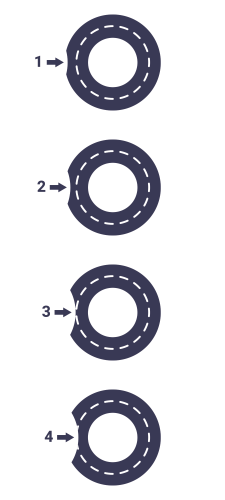
For rubber air lines, some reduction in the outer rubber material may be a maintenance or citable violation concern without necessarily meeting the threshold for an out-of-service condition. Once the cross-hatched reinforcement material becomes exposed and shows evidence of damage, the airline now meets the criteria for an out-of-service violation.
Plastic air lines (thermoplastic nylon tubing) have their own criteria. When the secondary colour of the tubing becomes visible through wear, this would constitute an out-of-service condition.
While neither of these conditions in their early stages necessarily means the line is going to experience an immediate failure, it does have the potential to set a unit and driver up for some down-time either through breakdown or enforcement related Out of Service. Ideally these defects are caught far before getting to this stage.
Air Lines: A Defect That Likes to Hide
From my experience inspecting commercial vehicles, worn or damaged air lines are one of the most overlooked defects. Finding a particularly bad one has even been known to happen after hearing the driver state “It just came out of a service”. That is not to knock mechanical shops, but rather to highlight the sometimes sneaky and hidden nature of these defects.
When inspecting the air lines on a commercial vehicle, a visual inspection is important, but sometimes it isn't enough. A driver or inspector needs to know where to look and, in many cases, needs to physically inspect the lines in these tough to see areas.
As air lines commonly run across frame rails, around differentials, near other lines and around other components where contact is likely to occur during normal operation, experiencing rubbing or chafing over time seems inevitable. The damage may be difficult to see, particularly when the affected portion of the line is tucked into a hard-to-access area.
This is where a physical inspection is particularly important. Running a hand or finger over a suspect section of hose or line can reveal a change in the surface of the material that isn't immediately visually apparent. Of course, this needs to be done carefully, not blindly running your hands over everything under a unit. The point being to recognize the areas where an airline is likely to contact another component and may not be able to be confirmed with just visual inspection.
Favorite “sneaky” locations
This primarily applies to tractor-trailer units, but two of my favourite spots to check for worn air lines are both within spitting distance of the driver's-side step.
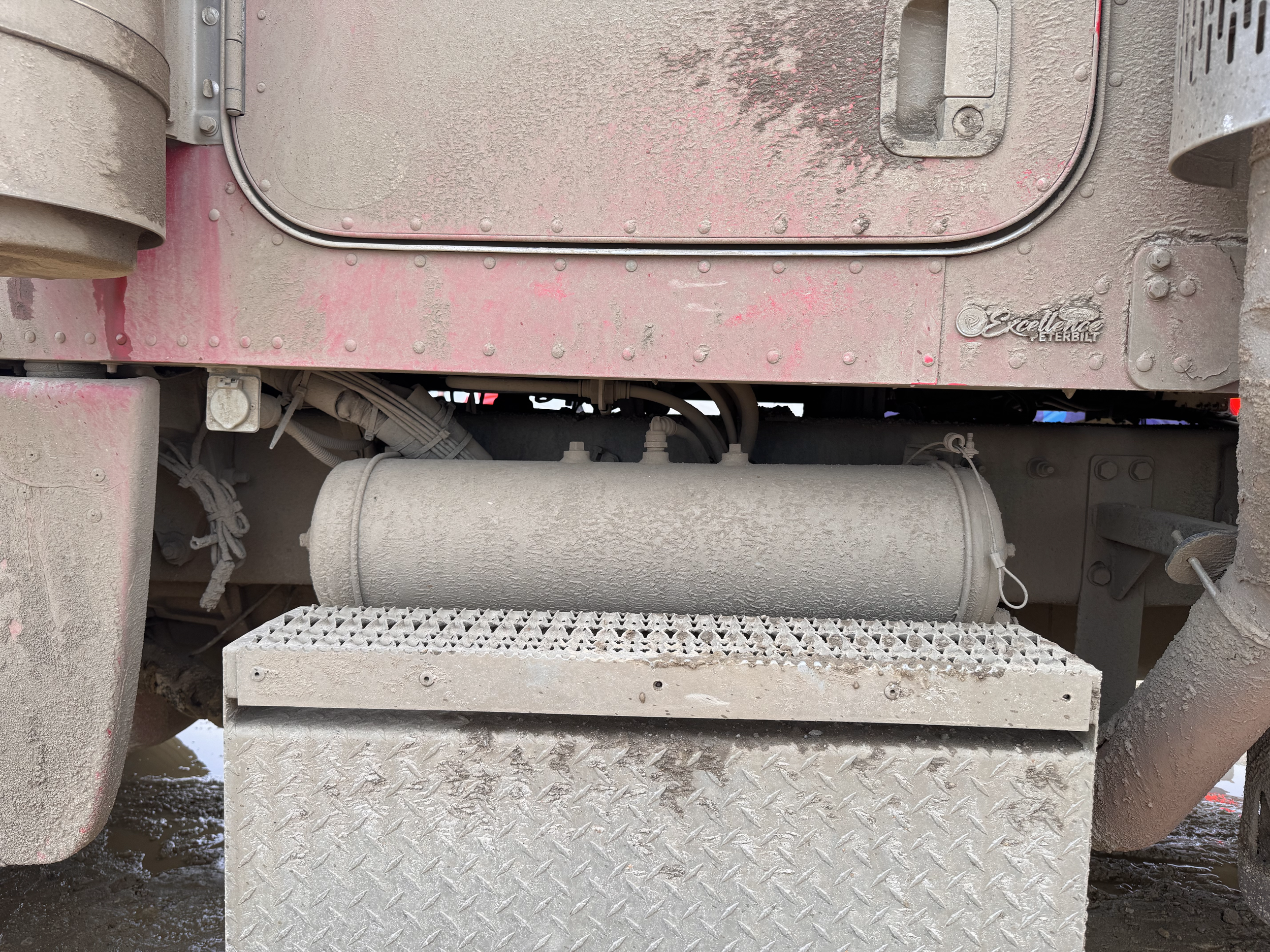
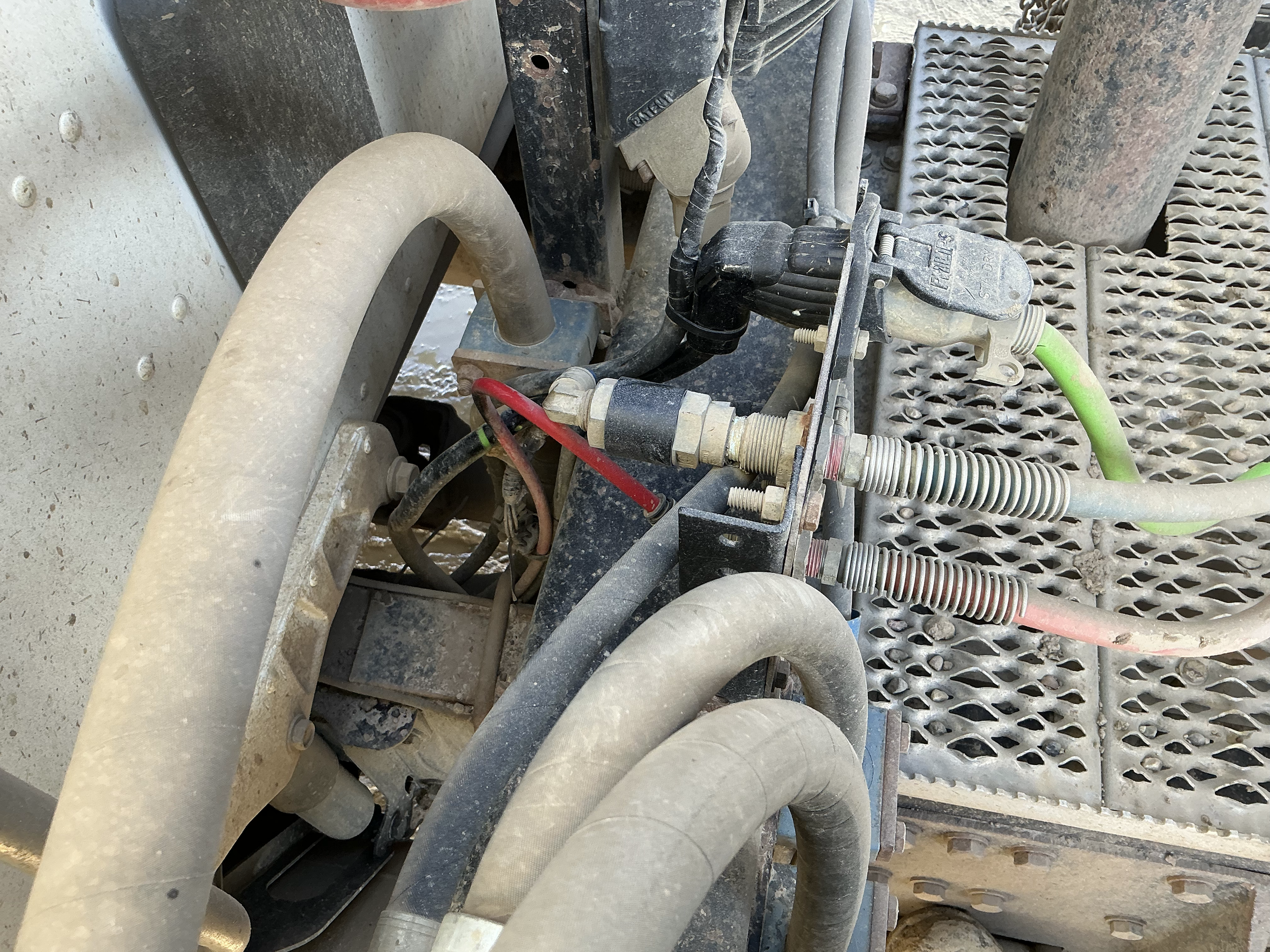
Behind the driver's step:
On units with an air reservoir tank mounted behind the driver's step, plastic air lines that run up and over the frame rail can rub against one another or nearby components. As these lines are hidden up and out of the typical inspection path around or underneath the unit, the potential exists for these worn lines to go unnoticed.Ahead of the glad-hand connections:
The plastic air lines leading to the glad-hand connections can also be a tough to see spot. These lines may be partially hidden behind protective plating or equipment mounted to the unit. The angles the lines take as they run back toward the main bundle along the frame can leave them vulnerable to rubbing, making this an area worth checking closely.
A Little Extra Attention Goes a Long Way
Airline wear may not be the most dramatic defect found during a commercial vehicle inspection, but it's a good example of how something relatively minor can develop into a much bigger problem. Knowing where to look, taking the time to inspect those hard to see areas, and catching wear early can save a carrier from unexpected downtime and a driver from an unwanted roadside surprise.
A recently serviced unit isn't necessarily a defect free unit and a quick visual walk-around doesn't always tell the whole story. Sometimes, finding a defect comes down to knowing the common trouble spots and taking a closer look.